Thursday, November 1, 2012

A Day for You to Read!

William Nicholson
“We read to know that we are not alone.”
― William Nicholson

Good Morning!  We have had a week full of hard work, deep thinking, failures, and accomplishments.  As we sit down to confer with you, Mr. C. and I are consistently amazed at what we learn about you as learners.  Keep getting connected and plugging in, keep staying engaged and challenging your mind, keep creating meaning and collaborating with each other.  The journey may be long, and bumpy at times but believe us when we tell you, it's worth it. 

In Lang. Arts today, please finish your Mosaic of Thought and then you may move onto free reading of a book of your choosing, as long as it is a just right book for you.  Take your time on your Mosaic of Thought as we really look to these pieces of your thinking to help us plan next steps for you all.  The thoughtful time you spend on it is more important than the due date (today)!

We will see you all this afternoon!
Dubbs

"I was living peaceably when people
 began to speak bad of me"

      Side note from C...

      The previous two paragraphs could not have been said any better.  We are so very proud of you all, your thinking, your abilities, and your latent potential just waiting to be unleashed.  Please remember...  IT'S NOT A WORKSHEET!!  IT'S NOT ABOUT COMPREHENSION.  IT'S ABOUT CONSTRUCTING MEANING, SYNTHESIS, & INQUIRY.
"I cannot think that we are useless or God
would not have created us."  
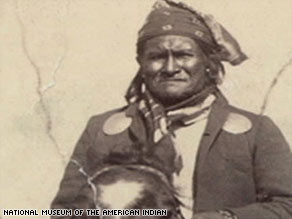
      You will be watching a documentary on Geronimo.  Please take at least ONE FULL PAGE of CORNELL NOTES!!  
"The soldiers never explained to the government
when an Indian was wronged, but
reported the misdeeds of the Indians."   

ONE FULL PAGE.
ONE FULL PAGE.



Seminar: Moving Forward...

Please survey the information below...


Inquiry:
- Levels of Questions
Examples:  Costa, Bloom, Marzano

- Skilled Questioning

-Socratic Seminars, discussions
   
-Critical Thinking Activities

- Student ownership of learning
               through critical thinking skills,       
               through writing questions

-Analyzing a prompt, question or academic task  (fr. ACR) *   


Please view the following videos with a partner:
True Grit

Inquiry Skills: 5 E's

Mosaic of Thought 1
Mosaic of Thought 2


From the cluttered mind of C & Dubbs, Teachers
School District of Waukesha
Waukesha STEM Academy

Wednesday, October 31, 2012

Seminar: Moving Forward...

Happy Camel Day to You All,

      Your teachers are immensely proud of you.  Most of you were pushed out of your comfort zones yesterday.  Some of you were pushed to your limits.  Some of you had breakdowns.  GREAT!  Now is the time for us to learn.

      BREAKDOWNS LEAD TO TO BREAKTHROUGHS!!

      There is a word known to some in education called "GRIT".  Grit is what is needed to pick yourself up after a fall.  Grit is what is needed to try again if a first try doesn't go your way.  Grit is perseverance.  Grit is the "I Can..." attitude.  Please take this with you as you go through your day today.


BREAKDOWNS LEAD TO TO BREAKTHROUGHS!!

      Moving forward, there are three things we need to think about:
1.  Go over and pore over the "Back Channel" transcripts.
2.  Conclude our seminar with FINAL THOUGHTS.
3.  SELF-EVALUATE: How did you meet the learning targets and how would you evaluate yourself?


The Learning Targets:
I can effectively communicate in a variety of settings in a way that is
appropriate for the task, purpose, and audience.

I can identify main ideas, analyze supporting details, and
evaluate inferences.


From the cluttered mind of C & Dubbs, Teacher
School District of Waukesha
Waukesha STEM Academy

Tuesday, October 30, 2012

Socratic Seminar Is Here!!

Happy Tuesday to you,

The present meets the past with Socrates and Socratic Seminars!!
      We would like to extend a warm and heartfelt welcome to our friends from Waukesha West.  Thank you Mr. Jonas and all the students who have come to not only visit us but also to work along side us.  Without further ado, here is what our day will look like:

7:25-8:58  Electives
9:01-10:00 Core1
10:03 - 11:00 Core 3
11:00 -11:30 Lunch
11:30 - 12:00 Core 2 
Connect
12:00-1:15  Core 2 
1:18-2:31 Core 4

Notes on our day...
**West Folks arrive in two shifts: Approx. 9 a.m. and 11:45ish**

Each core will be broken up into 3 parts
1.  We have a meet/ greet session.  Once you have a pair or triad we will engage in the Tribes activity One-Minute History.  Think about the question.  "If you could choose a line in a song that represents you, what would it be and why?"  

2.  Socratic seminar begins (approx. 30-45 minutes). Waukesha West kids will be using the evidence gathering sheet and other resources to document what they observe and provide suggestions/ feedback.  Waukesha STEM kids will be using their text sets & NOTE CARDS to drive the Academic Conversation.  

3.  Break at the 30 min. point of the seminar (if we feel necessary - if the pox is on, let the blood continue to flow!). This would be a time for partners to give feedback/ suggestions on evidence, position, lines of argument, etc.


Here are the Socratic Seminar questions.
The Seminar Questions:
What exactly is "genocide"?  How is it defined?  What are the warning signs?

What evidence throughout history proves that the Holocaust is an example of genocide?


Decide whether you think what happened to the American Indians was a true genocide or not.  If not, what label would you use to describe what happened to the American Indians.  Either way, what evidence throughout history supports your position?


The Back Channels
Histlit 1
Histlit 2
Histlit 3
Histlit 4
Histlit 5
Histlit 6
Histlit 7
Histlit 8
Histlit 9

The Learning Targets:

I can effectively communicate in a variety of settings in a way that is
appropriate for the task, purpose, and audience.

I can identify main ideas, analyze supporting details, and
evaluate inferences.

The Text:
What is Genocide?


From the cluttered mind of C & Dubbs, Teachers
School District of Waukesha
Waukesha STEM Academy

Monday, October 29, 2012

Socratic Seminar II: Guidelines & Contributions


Happy Monday,

      We hope you all had a great weekend, and can't wait to hear about it in circle.  Please read through the blog carefully and click on the links provided.  You will see a Youtube video, the blog post from Thursday last week, the seminar questions, and 11 contributions that Beth and I will be grading you on tomorrow during seminar.  Enjoy reading and have a great Monday!


The Seminar Questions:
What exactly is "genocide"?  How is it defined?  What are the warning signs?

What evidence throughout history proves that the Holocaust is an example of genocide?


Decide whether you think what happened to the American Indians was a true genocide or not.  If not, what label would you use to describe what happened to the American Indians.  Either way, what evidence throughout history supports your position?


11 Contributions to academic conversations and your evaluation:
1. Adds new ideas
2. Gives evidence to support by referring to text and/or media
3. Asks questions
4. Starts conversation
5. Gives positive comments/affirmations
6. Agrees or Disagrees appropriately
7. Builds on or challenges partners ideas
8. Elaborates or clarifies
9. Paraphrases
10. Actively listens
11. Exhibits distracting behavior


From the cluttered minds of C & Dubbs, Teachers
School District of Waukesha
Waukesha STEM Academy

Thursday, October 25, 2012

Socratic Seminar: QUESTIONS...


Happy Thursday!

      Last night Beth and I had a great meeting with our good friend Mr. Jonas.  Mr. Jonas is the Waukesha West AP English teacher that will be bringing his kids next Tuesday for our Socratic Seminar.  They will be coming because they are learning something called SYLLOGISM.  This is a form of argumentation.  They will be looking for the positions we take on a research question.  Mr. Jonas' students will be partnering with us to help us engage in academic conversation and present our points.

      So, here are the questions we are trying to find answers to...

What exactly is "genocide"?  How is it defined?  What are the warning signs?

 What evidence throughout history proves that the Holocaust is an example of genocide?

Decide whether you think what happened to the American Indians was a true genocide or not.  If not, what label would you use to describe what happened to the American Indians.  Either way, what evidence throughout history supports your position?


      Now that we know are line of questions lets revisit some of our research.  Below you will find Brainpop and Hippocampus sites centered around our research of the American Indian Story.  If your schema is cloudy look at these:

GENOCIDE: United States Holocaust Memorial Museum

Thanksgiving & The Wampanoag

13 Colonies

The French and Indian War

Tecumseh: The War of 1812

Summary of the American Indians

Wounded Knee Massacre

The Trail of Tears

Indian Removal Act: Hippocampus.org

Indian Resistence: Hippocampus.org

Effects of the Indian Wars: Hippocampus.org


From the cluttered mind of C, Teacher
School District of Waukesha
Waukesha STEM Academy

Wednesday, October 24, 2012

STOP. THINK. REACT.: Annotating & Text Coding...

Good day to you 8th graders,

      Happy Camel Day to you all!  Today we have a STEaM schedule so we have to get right down to work.  You all did such a phenomenal job yesterday.  Beth and I are proud of you for diving into the 5 E's with so many directions and texts.  Thank you.

      So, yesterday we started our Inquiry process by looking at the 5 E's.  Engage. Explore. Explain.  Elaborate.  Evaluate.  Today, Beth and I want to share with you a reading strategy that will take your LITERACY SKILLS to the next level.  If practiced regularly and over the next few days, your thinking will improve dramatically.  The reading strategy I'm hinting at is this...

STOP
THINK
REACT

      When you are reading there are two reasons for stopping.  One, is that the information in the text forces you to STOP because it causes a thought to form.  The second reason to STOP while reading is because you have come to the end of a paragraph or a section in the text.  Whether you stop yourself or the text stops you, the next step is to THINK.

      When you start to THINK while reading you are trying to THINK OUT LOUD.  When you THINK OUT LOUD you are talking about what is going on in your mind.  By reciting your thoughts OUT LOUD this prepares you for the final step: REACT.

      When you THINK, you also decide how you are going to REACT to the text.  While REACTING there are so many options and avenues to choose.  Here are three that engaged 8th graders usually decide on.  If these three reactions to text are practiced regularly, your reading, thinking, and writing will help you as you try to CONSTRUCT MEANING.  Trust us!!

1.  Annotate the information that you think is most important.
2.  Share your feelings/ideas about the information.
3.  Paraphrase/Summarize the paragraph or section.

      The magic words of the day are... STOP THINK REACT

SQ3R: Tim and Moby Style


PARAPHRASING: Tim and Moby Style

From the cluttered minds of C & Dubbs, Teachers
School District of Waukesha
Waukesha STEM Academy

Monday, October 22, 2012

The Five E's: Academic Investigation...

What up peeps,

      We have been studying(reading, writing, thinking, talking, and investigating) both the Holocaust (1933-1945) and the American Indian Story (1600-2012).  Now is the time to take our understanding to the next level. We will be doing that today by engaging in a Tribes activity called The Five E's.


The Five E's: These are the 5 phases of our academic investigation.  
Engage (Teacher Leadership): What do we know about the American Indian Story?  What do we know about the Holocaust?  What similarities can we find that link the two together?  What differences can we find that separate the two?
Explore (Student Leadership):  Tasks:  Interact with 12 different pieces of text within groups of 4 or 5 by using SQ3R.
Study Group Roles:
-Scribe for Group notes
-Scribe for Carousel Brainstorming notes
-Paraphraser ("Reciter")
-Readers
      SQ3R 
       1. Survey(Skim, Scan, Read through)
       2. Question(Think about how to attack the text. 
                 What will you be searching for as you interact with text?)
       3. Read
       4. Recite(Paraphrase out loud)
       5. Review 

Explain (Student Leadership): Academic Investigation: Compare and Contrast what we know about The American Indian Story and what we are reading about the Holocaust.  What evidence from the text sets support your findings?  Conduct an academic conversation that presents your discoveries.  
Elaborate (Student Leadership): OPEN UP YOUR FINDINGS AND CONVERSATIONS WITH THE WHOLE CLASS.  Involve other study groups in the class to expand on concepts, connect to real-world issues and think of questions for further exploration.  What is the BIGGER PICTURE on the social or historical level?  
Evaluate (Student Leadership):  Narrow down and generate 15 questions based on new information presented while interacting with texts.


From the cluttered minds of C & Dubbs, Teacher
School District of Waukesha
Waukesha STEM Academy

Welcome to Think Spot Kiddies...

Howdy Y'all,

      This is your friendly, neighborhood Historical Literacy here.  I'd like to welcome you to Think Spot.  This blog will be our weekly stop for THINK BACKS on learning, news and updates, directions and instructions, as well as serving other academic purposes throughout the year.  I like to post videos, texts, and NUGGETS here from time to time as weekly reviews of what's going on in the class.  Think Spot is also a great place to post comments to me and/or start discussions with others.

      That said, please take some time to click on the links below in an effort to jog your memory from last week.  A lot of dust can settle over a weekend so shake out those cobwebs.

Revisit the French & Indian War with Tim and Moby...

Get another look at TECUMSEH the Shawnee Chief

Do you remember the Trail of Tears? (Indian Removal:1830's)

The Wounded Knee Massacre of 1890...


      In closing, I leave you with this quote from a historian by the name of Howard Zinn.  This quote comes from his book A People's History of the United States.

If women, of all the subordinate groups in a society dominated by rich white males, were closest to home (indeed, in the home), the most interior, then the Indians were the most foreign, the most exterior. Women, because they were so near and so needed, were dealt with more by patronization than by force. The Indian, not needed-indeed, an obstacle-could be dealt with by sheer force, except that sometimes the language of paternalism preceded the burning of villages.

What do you think Howard Zinn is trying to get at with this paragraph?
What meaning can you construct from this short excerpt?

Signing off,
C

From the cluttered minds of C & Dubbs, Teachers
School District of Waukesha
Waukesha STEM Academy

Wednesday, September 5, 2012

Day 2: The Game...

Hey Gang!

      Welcome to Think Spot, your friendly neighborhood Hist Lit Blog.  We will be visiting this blog frequently throughout the year for information.  Today you should be able to find as link that will explain the rules of our game today.  Good luck and enjoy!

Wizards & Gelflings

From the cluttered mind of C, Teacher
School District of Waukesha
Waukesha STEM Academy