Thursday, February 21, 2013

Guest Teacher February 21: TLH, WICR, SQ3R...

Happy Thursday/Friday Kiddos,

     Today is a throw back day.  That means we will be immersing ourselves in text.  We may also be looking at topics within history that we have already discussed before.  As you do this you will need to focus on 3 things...

1.  TLH Categories
2.  WICR
3.  SQ3R Strategies

      TE- Through Their Eyes
      CE- Cause & Effect
      TP- Turning points
      CC/CH- Change & Continuity
      UP- Using the Past
Here are your TLH Categories that I am expecting to see in your texts as you annotate them.  You must read Article 27: History's Paradox.  The other article you may choose.  The articles may be read with a partner or alone.  NO MORE THAN 2 PEOPLE IN A GROUP!!
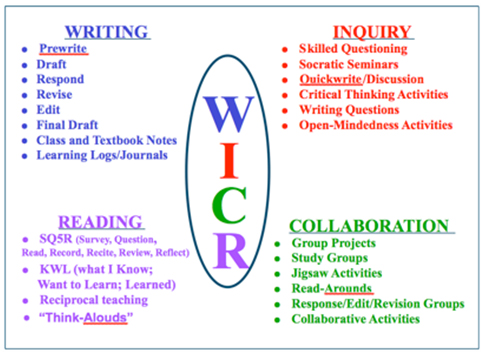
      WICR stands for Writing, Inquiry, Collaboration, and Reading.  We will revisit this next week when Dubbs and I are back.  This will be the linchpin that carries you into high school.  Remember it well.  WICR rocks!

      And finally, I will be leaving you with SQ3R.  Some of you may hate me as much as last years 8th graders for this little bundle of joy.  SQ3R stands for Survey, Question, Read, Recite, Review.  Think about how you use this today in your reading and be ready to write a short Quickwrite next week on how you use this in your literary life.

Enjoy, and have a great day!!

From the cluttered mind of C, Teacher
School District of Waukesha
Waukesha STEM Academy

Tuesday, February 12, 2013

Immersion/Coalesce Conferences w/ C & Dubbs...

Howdy Y'all,

      Happy Tuesday, and saddle up for a great day!  I am so so so so looking forward to sitting down with all of you to talk history.  I know history is not everybody's thang, but I assure you, there is something for everyone in history.  All it takes is aligning your interests and curiosity to what was taking place at that time.  Keep this in mind as our conversation together may urge you to think about what your GO PUBLIC INQUIRY will entail.  

      You will find some of the questions I will be asking below.  Some of the questions should look familiar.  Dubbs and I are not trying to trick anyone nor set anyone up for failure.  That being said, feel free to SHOW WHAT YOU DON'T KNOW.  Sometimes what you don't know is more important that what you do.

Why did the American Colonists want to free themselves from Great Britain?

What makes a good leader?

What happens when government goes wrong, and why had government gone wrong under the Articles of the Confederation?

What's the difference between the Declaration of Independence, the Articles of Confederation, and the Constitution?

How did problems lead some Founding Fathers to create a Constitution?

Why could the Constitution be considered a "political innovation" of its time?

How did the Founding Fathers use "synthesis" and "inquiry" to create the Constitution?

Why do you think it's called the American "Revolution"?

How did the United States get to 1787?

WHAT QUESTIONS DO YOU HAVE NOW THAT YOU HAVE STUDIED THIS MOMENT IN HISTORY?


From the cluttered mind of C, Teacher
School District of Waukesha
Waukesha STEM Academy

Friday, February 1, 2013

Welcome Back to Think Spot!

Hello Everyone,

      Thank you all so very much for letting me know that you all use this as a resource.  I will double and redouble my efforts to make weekly posts here for you to use in your learning.  Please know that Dubbs and I are proud of you.  It is a great feeling to know that learning is still happening even though we are not in the classroom with you all.

      Today, here are the essential questions that are your exit slips:

1. Why could the Constitution be considered a "political innovation" of its time?

2. How did the Founding Fathers use "synthesis" and "inquiry" to create the Constitution?

3. Why do you think it's called the American "Revolution"?


      These questions can also be found on edmodo.  Please respond to one or all of these questions in a new post.  Also, get ready for a Socratic Seminar as well as something new...  PINWHEEL DISCUSSIONS and PHILOSOPHICAL CHAIRS!!  These are really fun designs for academic conversations.  We hope you enjoy your day.  We miss you.


From the cluttered mind of C & Dubbs, Teachers
School District of Waukesha
Waukesha STEM Academy

Tuesday, December 18, 2012

The Bill of Rights: 10 Ammendments...

Hey Gang,

      Today is another FLEX day.  I will be here at noon and be staying until 8pm.  As for the day today, there are a few things you must do.

1. Finish both the modules that have been assigned over the past two weeks.  ( Slip Game & 7 Principles)
2. Log onto Edmodo and join the group Bill of Rights: 10 Ammendments
3. Read the TIME Magazine article Your Bill of Rights
4. Contribute to an academic discussion centered on the Bill of Rights.

The issues addressed in the Bill of Rights include freedom of religion, press, speech, and assembly; the right to keep and bear firearms; the right to refuse to house soldiers on private property; the right to trial by jury and due process of law; protection against unreasonable searches and seizures; and protection against cruel and unusual punishment. These subjects would be covered in the first eight of ten amendments known as the Bill of Rights. Madison used the Virginia Declaration of Rights, written by George Mason in 1776, as he led the development of the national Bill of Rights.


From the cluttered mind of C,
Teacher School District of Waukesha
Waukesha STEM Academy

Monday, December 17, 2012

Constitutional Principles II...

Happy Monday Teenie Boppers,

      It is great to be back here with all of you.  I hope your module on Friday helped you construct some meaning out of the Constitution.  Those 7 principles we found in the module can be found and revisited in the media below...

7 Constitutional Principles

Hippocampus Constitutional Principles

      I would highly suggest you revisit at least one of these links to set your table for class.  As we discuss your understanding and learning from last week, there is an essential question we all need to keep in our minds.  Why do you think the Framers and Founders emphasized these constitutional principles so much?

      Remember, you have two modules due tomorrow.  The Slip Game module and the 7 Principles module from last week.  Once you have set your table, revisited some of the media, and have your work, meet in community circle.  Enjoy!


From the cluttered mind of C, Teacher
School District of Waukesha
Waukesha STEM Academy

Friday, December 14, 2012

WICR & Constitutional Principles...

Happy Friday Gang,

      Today is Friday, December 14, 2012.  Your teachers will miss you today, and hope you all have a phenomenal weekend.  As you start your work for the day, remember that you will be doing modules for both myself and Dubbs.  Her Module can be found on Edmodo. My module can be found on Bb9  in the same place as the first module you did on the Constitution.

          Historical Literacy - Founding & Framing - Immerse - The Constititution

When you get into The Constititution you will see the Slip Game module, and you will also see 7 Constitutional Principles.  The 7 Constitutional principles are Popular Sovereignty, Limited Government, Federalism, Checks and Balances, Separation of Powers, Republicanism, and Individual Rights.  There is an 8th one called Judicial Review, but I don't think the Founders & Framers had this in mind when they wrote the original document.  Just focus on the main 7.

      The graphic organizer from this module will be due next Tueday.  We will need the graphic organizer for an activity to be done together in class.  Enjoy!  Learn.  Construct Meaning.

Yours Truly,
C

From the cluttered mind of C, Teacher
School District of Waukesha
Waukesha STEM Academy
Tuesday, December 4, 2012

From Founding Fathers to The Constitution...

Hello from the SLATE Conference,

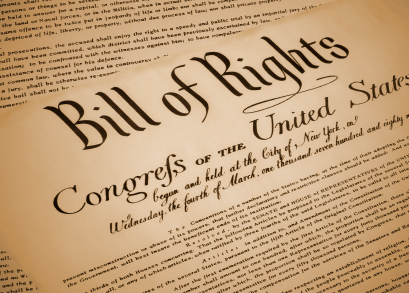
      Please view the links below and read the short blog post that follows.  Last week we tried to take a close look at the first 5 Presidents.  Those men were not just our first Presidents, but they were also what historians call our FOUNDING FATHERS.  We will be switching gears here to look at the work they did on The Constitution, The Declaration of Independence, and The Bill of Rights.  

      A CONSTITUTION is a legal framework for government.  It tells how a government is organized and run.  Most constitutions are in writing, but some have unwritten parts.  If a constitution tells a government how to run, then what are the purposes of government?  How should governments be organized?  How are people selected to serve in government, and how is government supposed to go about doing business?  
      
Having a constitution does not mean that a nation has a CONSTITUTIONAL GOVERNMENT.  A constitutional government means that there are limits on the powers of government: Limited Government.  This means there are things the government cannot do and actions it may not take.  Our constitution limits the powers of government.  The limits are written into the Constitution.

The CONSTITUTION with Tim and Moby

Webmix on Symbaloo

From the cluttered minds of C & Dubbs, Teachers
School District of Waukesha
Waukesha STEM Academy
Thursday, November 29, 2012

TLH Categories: How do you think we have met these learning targets?

Good Morning and Good Day,

      Some of these faces should start to look fairly familiar by now.  One, two, and three are GW, JA, and TJ.  Hopefully, if time permits, we will be able to get to 4 and 5.  The two men that followed Jefferson were also Virginians, James Madison and James Monroe.


     Here are the Learning Targets we are trying to meet.  What do you think?  How have we met them?  Have we met them completely?
I can classify series of historical events and developments as examples of change and/or continuity.

I can analyze multiple factors that influenced the perspectives of people during different historical eras.


From the cluttered minds of C & Dubbs, Teachers
District of Waukesha
Waukesha STEM Academy


Wednesday, November 28, 2012

TLH Categories: TE, TP, & CE...

Happy Midday 8th Graders,

      Below you will find the link to the graphic organizer needed to complete our work today.  We have been looking at the first few Presidents to find examples of Turning Points, Cause and Effect Relationships, and Through Their Eyes Perspectives.  We are looking within Historical Context to apply what we have learned so far: TP, TE, CE.

TLH Graphic Organizer

      Here are the Learning Targets we are trying to meet.  What do you think?  How have we met them?  Have we met them completely?

I can classify series of historical events and developments as examples of change and/or continuity.

I can analyze multiple factors that influenced the perspectives of people during different historical eras.


From the cluttered mind of C, Teacher
District of Waukesha
Waukesha STEM Academy

Monday, November 26, 2012

Welcome Back: TLH & Turning Points

Good Day to Everyone,

      Welcome back from a great extended weekend.  We're getting started right away so make sure your tables are set to do great thinking.  We are leaving The American Indian Story and The Holocaust behind as we continue on into U.S. History.  Our next topic of study will be the Founding and Framing of the United States of America.  Today specifically, we are starting with the year 1776.

      1776 was a TURNING POINT for our country.  Some historians refer to dramatic changes as turning points.  A turning point signifies a profound change in one or more of the major arena of human experience (political, social, economic, or cultural/intellectual).  Why do you think the year 1776 could be considered a TURNING POINT?


TLH Blog Post


From the cluttered minds of C & Dubbs, Teachers
School District of Waukesha
Waukesha STEM Academy