Reading is thinking. Reading is a process. Comprehension and collaboration are the desired outcomes of this blog. Think Spot is high tech and high touch.
Happy async day everyone! Today is Friday, September 25, 2015. If I were in your shoes, I would love to have some time to myself today. Your friendly neighborhood social studies teacher volunteered to post the async work today. So, Cougar House's async assignment is fairly simple.
As you probably know, we have been talking about, watching, and reading about AGRICULTURE. The invention of farming was probably the most important invention/innovation human beings ever discovered. Your mission, should you choose to accept it, is to define agriculture, find a photo/image that represents agriculture, and give an example of agriculture today. Below is a new video that may help you. Good luck and good hunting.
Love, peace, and taco grease,
Mr. C
From the cluttered mind of C,
Teacher, Kenosha Unified School District
Today is Thursday, September 24, 2015. Here is your friendly neighborhood classroom blog: THINK SPOT. On it, you will find classroom updates, daily agendas, videos, comments, articles, links, and FUN! At least that's my hope for you all.
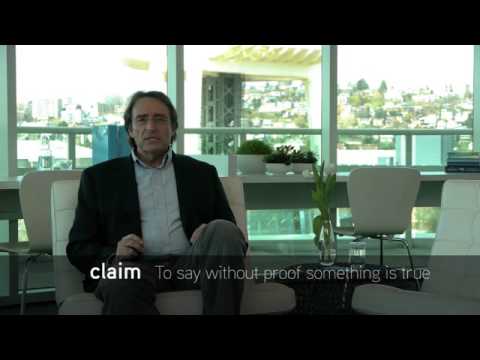
So far in this World History course, we have spent A LOT of time watching. We have spent a lot of time watching documentaries and clips describing in great detail the innovation we know as AGRICULTURE. One of those clips we have watched is below. It is the short 2 minute 37 second clip of David Christian describing AGRICULTURE. As you read on and explore this blog, click on the videos included
As you probably already know, your first major assessment will be next Tuesday. We have already gone over most of the questions and answers together in class. I have tried to set you up for success for this Basic Proficiency Exam. Remember, the items included on the assessment are there to evaluate you on the "Basic" needs you will have to apply in this course.
We have also begun to think about two reading strategies. Both of them we have practiced together. The #1 reading comprehension strategy that is the most unused by middle school students is REREADING! In our case, we have practiced rereading by "RE-WATCHING". The second reading strategy that we have been practicing together is READING WITH A QUESTION IN MIND. That is what we will continue to practice today in preparation for the assessment next Tuesday. There are two questions that we will be "WATCHING" with in mind:
1.) Why was AGRICULTURE so important and how did it change the way early societies lived?
2.) Why did early humans migrate and how did migration affect their lives?
Now, this second question is a DOOZY! However, if you are able to WATCH WITH A QUESTION IN MIND, then you will be able to find your answers in this second video also by David Christian. If you fastforward to part 2 you will find the answers to the second question. Good luck and good hunting.
Love, peace, and taco grease,
Mr. C
P.S. F-O-R-E-V-E-R!
From the cluttered mind of C.
Teacher, Kenosha Unified School District
Today is Thursday, February 13, 2014. We have looked extensively at Guns, Germs, and Steel thus far. We have found Jared Diamond's claim/theory in his work. We are beginning to find counter arguments or counter claims in the writings of other people. What do they say about him as a professional and scientist? (Ethos/Authority) What do people think about JD's logic and evidence? (Logos) How do they feel about him? (Pathos).
Monday's blog post laid out our WICR strategy of attacking our learning. It looked something like this:
Writing - Written Conversation (Edmodo Chatroom) Inquiry - What do you perceive Jared Diamond's claim/theory to be? What point of view is he posing? Collaboration - Quotation Mingle Reading - Reading With a Question in mind? SQ3R RI 8 Delineate and evaluate the argument and specific claims in a text, assessing whether the reasoning is sound and the evidence is relevant and sufficient; recognize when irrelevant evidence is introduced. I noticed a few mistakes as I read it over again and again. The written conversation you all were involved in was not the TED-Ed written conversation. If we look at Edmodo, we will see many phenomenal posts and some halfway decent responses. I also noticed I was trying WAY TOO HARD to cram too much into the "R"-Reading. Your humble Big History teacher is tremendously proud of the what you all have been using Edmodo, and I will say that lately you have been listening to each other a little better. Let's try to really dig into our Edmodo and TED-Ed discussions by offering insightful, extending, and elaborating responses to each other. So... Today's learning tactics for attacking our learning are as follows:
WRITING- Written Conversation (TED-Ed Discussion Board) INQUIRY- Now that we are identifying counter arguments to JD, can we begin to delineate connections between Guns, Germs and Steel and Thresholds 6 & 7? COLLABORATION- Community Circle READING- SQRRR (R2- "Recite" will be our focus.)
If you have made it this far in the blog post then you are actually reading it. Thank you. Please wrap up your reading experience by clicking on the following links. Threshold 6 is Collective Learning. Threshold 7 is Agriculture. We will need to keep these in mind as we try to connect BH to GGS. Enjoy, and have fun!!
Yours truly,
C-Dawg
From the cluttered mind of C, Teacher
School District of Waukesha
Waukesha STEM Academy
Today is Tuesday, February 11, 2014. Look back at the blog post from last week. I started to detail some processes that directly affect us as learners especially in a content-area literacy class like The Big History Project. It is my hope that by the end of the school year you have not only learned some of these processes, but have also OWNED THEM.
If we look at our day from a WICR perspective, here is our agenda:
Writing - Written Conversation (Edmodo Chatroom) Inquiry - What do you perceive Jared Diamond's claim/theory to be? What point of view is he posing? Collaboration - Quotation Mingle Reading - Reading With a Question in mind? SQ3R RI 8 Delineate and evaluate the argument and specific claims in a text, assessing whether the reasoning is sound and the evidence is relevant and sufficient; recognize when irrelevant evidence is introduced.
If we look at our day from an SQ3R perspective, we will be focusing on the second "R".
S Q R Recite - (Record, React, Respond, RE-READ, Record) R
And last, but certainly not least, if we look at today from a QEI perspective, we will be focusing on INTERPRETATION.
Question Evidence Interpretation
Keep these processes in mind as we move through the morning. They will follow us through the week as well as into our next project: LITTLE BIG HISTORY.
Yours truly,
C-Dawg
From the cluttered mind of C, Teacher
School District of Waukesha
Waukesha STEM Academy
Today is Camel Day, February 5, 2014. It probably comes as no surprise to most of you, but by the end of class today your presentations are due. If we reflect on the learning we have done over the past few weeks we can begin to see a process emerge. There are a few ways that we can think of this process. Here are a few of them:
1.) IMMERSE
INVESTIGATE
COALESCE
GO PUBLIC
2.)
Annotate
Analyze
Articulate
Activism
3.)
QUESTIONS
EVIDENCE
INTERPRETATION
4.)
ANALYSIS
INTERPRETATION
PERSONALIZATION
TAKE ACTION
When we look at these processes and think about the things we do during each step in a process, you can begin to see some connections. Together you can see similarities. Look at where we annotate. Look at where we share our findings. Look at where we build our own interpretations. I leave you with a question in mind...
Where does evidence play a role in each one of these processes?
C... Out
From the cluttered mind of C, Teacher
School District of Waukesha
Waukesha STEM Academy
Today is Tuesday, February 4, 2014. You have embarked and are probably in the middle of creating a presentation based off of texts, videos, and images that you collected so far. In the design brief you will find two inquiry questions:
1. How did your culture/time period’s worldview affect their choices and actions? 2. What values, skills and forms of knowledge did people need to succeed?
When we READ WITH A QUESTION IN MIND we use these questions to make our reading meaningful. We look for areas in the texts, videos, and images that would answer these questions. We look for possible actions and choices. We look for values, skills, and forms of knowledge. That said, sometimes the actions and choices we read about give us insight into the worldview of people. They explain why people do what they do.
Worldview, is a comprehensive perspective or philosophy that is made up of people's knowledge and experiences. Perception dictates reality. Therefore, a worldview dictates how people see the world. How people see the world dictates how they act, react, and make choices in it. As you read and try to answer the inquiry questions try to find evidence that points out people's worldview. It's always connected to thought and action.
Lastly, we come to claim testing. Claim testing and the 4 "claim testers" assist us in analyzing information that we may need to IGNORE, TRUST, or INVESTIGATE. From what we have learned so far, Bob Bain has shared 4 ways in which we try to spot "A LIE".
A= Authority
L= Logic
I= Intuition
E= Evidence
Use these in your work and remember them. They will come back as we look at each others' presentations and CLAIMS as the week ends.
Thanks for reading, and as always...
Love, peace, and taco grease,
C-Dawg
From the cluttered minds of C and gang, Teachers
School District of Waukesha
Waukesha STEM Academy
I apologize for not being there again today. I have a meeting with Mr. Jonas (who is my docent) and other teachers who involved in a program throughout the district. I will be back tomorrow.
In the meantime, continue to work on your Investigation Essays. As far as I know, there are only a few of you who are almost finished and ready to make revisions. That said, I am posting two rubrics on Edmodo that you are going to use to self-assess yourselves, your Investigation Essays, and possibly another Top Gun you would like to partner up with. Remember, a little peer review is good for the soul.
You have already assessed yourselves on the questions you have asked as good historians do. In the final stages of writing your Investigation Essay, you will need to look back at your work for the evidence you have used and more specifically, where you tied in Through Their Eyes evidence.
As we finish Units 3 & 4 and reflect back on the process of "DOING HISTORY", we will be thinking deeper about three things: QUESTIONS, EVIDENCE, and INTERPRETATION. This trifecta is what history is all about. I bet if you think about what you needed to do to write your essays you will see that you've already been doing this.
Love, peace, and taco grease,
C
From the cluttered mind of C, Teacher
School District of Waukesha
Waukesha STEM Academy
Looking at history Through The Eyes of those who lived history can be the most fascinating aspect of historical study. It opens a door to understanding both what all humanity shares in common and the many ways in which we are different. It brings us closest to the real lives of real people in the past. Still, we can never be an a crazy scientist trying to prove a theory they have believed for years or an Italian boy preparing to leave the only home he knows to join his father in a far away place called New York. We can never be an African-American woman watching her children dragged away by slave traders.
We have a different set of beliefs, expectations, desires, fears, opportunities and experiences. What is logical or common place to us may have been impossible in their world. Likewise, what is inconceivable to us may have been entirely possible at any time in the past. Ignoring this leads to errors of "presentism." When we wonder about the past, while avoiding "presentism", we look for the values, skills, and forms of knowledge people needed to succeed back then. We try to reconstruct the worldview that affected their choices and actions during their day. Remember, you are the historians. You are responsible for "doing history".
C...Out!
*Adapted from Thinking Like a Historian
From the cluttered mind of C, Teacher
School District of Waukesha
Waukesha STEM Academy





![[thumbnail]](http://cdn2.worio.biz/d/2014/1/18/-/sd=286/-90946593727901977710.jpeg)